


November 12, 2026
Tech Supply Shed
November 23, 2026
,
Tech Supply Shed
Can You Take a Bluetooth Speaker on a Plane? NZ Rules
Quick answer: You can generally take a portable Bluetooth speaker on a plane in New Zealand if its battery complies with the operating airline's rules. Carry-on baggage is the best option for domestic and international flights. Checked baggage may be permitted for some speakers with installed batteries, but additional conditions apply. Loose lithium batteries and power banks must not go in checked baggage.
Flying from Auckland to Queenstown, Wellington to Christchurch, or overseas to Australia, Fiji or further afield? The important questions are where you pack the speaker, how its rechargeable battery is classified and which airline operates each flight. This guide explains the key differences and practical checks before you travel.
Hero image: illustrative composite featuring a Bose speaker and an airport background.
Can a Bluetooth speaker go in carry-on luggage?
Yes, for most small and medium portable speakers whose lithium-ion batteries fall within the permitted capacity. Carry-on keeps the device accessible, protects it from baggage handling and allows you to show it at security if requested. Check the manufacturer's battery specifications rather than relying on the speaker's size, wattage of audio output or advertised playing time.
Make sure the speaker is protected from damage and accidental activation. If you have a separate power bank or spare lithium battery, keep it in cabin baggage, protected against short circuits and subject to the airline's quantity and capacity limits.
Domestic NZ flights: Auckland, Wellington, Christchurch and Queenstown
On a domestic New Zealand flight, such as Auckland to Queenstown, Wellington to Auckland or Christchurch to Dunedin, a qualifying rechargeable Bluetooth speaker can generally be carried in hand luggage. The relevant rules are set by your airline and New Zealand aviation safety requirements, not by the length of the flight.
For an Air New Zealand domestic journey, follow Air New Zealand's battery and device guidance. For a domestic Jetstar flight, check Jetstar's dangerous goods requirements. Cabin baggage weight and size limits still apply, even if the battery itself is acceptable.
Domestic security screening arrangements can differ by airport and checkpoint. Security officers might allow the device to remain in your bag or ask you to remove it. Our NZ airport electronics screening guide explains what to expect.
International flights: travelling from NZ and connecting overseas
For international flights from New Zealand, such as Auckland to Sydney, Christchurch to Melbourne, Auckland to Fiji or flights connecting through Singapore, Dubai or Los Angeles, carry-on is again the sensible default. But do not assume that one airline's guidance applies to every leg of a journey.
Check the operating carrier on each flight, particularly when your booking includes codeshares or different airlines. A battery accepted by one carrier might require approval on another. Transit airport screening and carry-on bag rules may also differ, and a large speaker might exceed cabin size or weight limits despite meeting battery requirements.
Before leaving New Zealand, check your speaker's model number, Wh rating, whether it can recharge a phone, and the policies for your outbound and return journeys. Airline rules can change, so rely on official guidance close to departure.
Carry-on versus checked suitcase: what is allowed?
| Item | Carry-on | Checked suitcase |
|---|---|---|
| Speaker with approved installed lithium battery | Generally permitted | Conditional; check airline |
| Installed battery 100–160Wh | Airline approval generally required | Airline approval and conditions |
| Spare lithium-ion battery | Only within applicable restrictions | Not permitted |
| Separate power bank | Only within applicable restrictions | Not permitted |
| Damaged or swollen battery | Do not carry | Do not carry |
A built-in speaker battery is not automatically treated the same way as a loose power bank. Nevertheless, some portable speakers can also charge phones. Check whether your airline applies additional rules to devices with power-bank functions, especially for checked baggage.
Air New Zealand speaker rules
Air New Zealand distinguishes portable electronic devices containing installed batteries from spare batteries and power banks. Its guidance recommends carrying lithium-battery devices in the cabin, and states that installed-battery devices should only be checked if carry-on is not possible. When an airline accepts a device in checked luggage, it must be completely switched off and protected against accidental activation and damage.
Do not assume that aircraft Bluetooth permissions allow music to be played aloud. Crew instructions take precedence. For audio during the flight, see whether Bluetooth headphones work on a plane and our headphones for long flights guide.
Jetstar Bluetooth speaker rules
Jetstar's dangerous goods guidance similarly addresses devices containing lithium batteries, spare batteries and power banks. Its baggage rules are not a blanket guarantee that every speaker may travel in every bag. Review battery capacity, whether it is installed or loose, and the airline's current device and power-bank instructions. Power banks must be kept accessible during the flight under Jetstar's rules.
Air New Zealand and Jetstar each state a limit of 15 battery-powered personal electronic devices per passenger. Check the operating carrier’s current limits for spare batteries and power banks separately. Jetstar prohibits using or charging a separate power bank on board and requires it to remain accessible. For a speaker that can charge another device, such as the Charge 6, ask the operating airline how it classifies that function and do not use it to charge a device on board unless the airline explicitly permits it. See our power bank rules for NZ flights.
What do 100Wh and 160Wh mean?
Airline lithium-ion battery restrictions are typically expressed in watt-hours (Wh). Many personal portable speakers have batteries below 100Wh, but the correct classification depends on the actual model. Batteries above 100Wh and up to 160Wh generally require airline approval, while lithium-ion batteries above 160Wh generally cannot travel in passenger baggage.
If the battery label provides volts and amp-hours, calculate Wh = volts × amp-hours. A hypothetical 7.4V, 5Ah battery is 37Wh. If your label shows 5,000mAh, convert to 5Ah before multiplying. Do not confuse speaker output watts with battery watt-hours.
JBL Bluetooth speakers for travelling
These examples illustrate different speaker formats available from Tech Supply Shed. They are product examples, not an airline-approved list. Always confirm the exact model's battery rating with the manufacturer and operating airline.
JBL Clip 5: compact for day trips
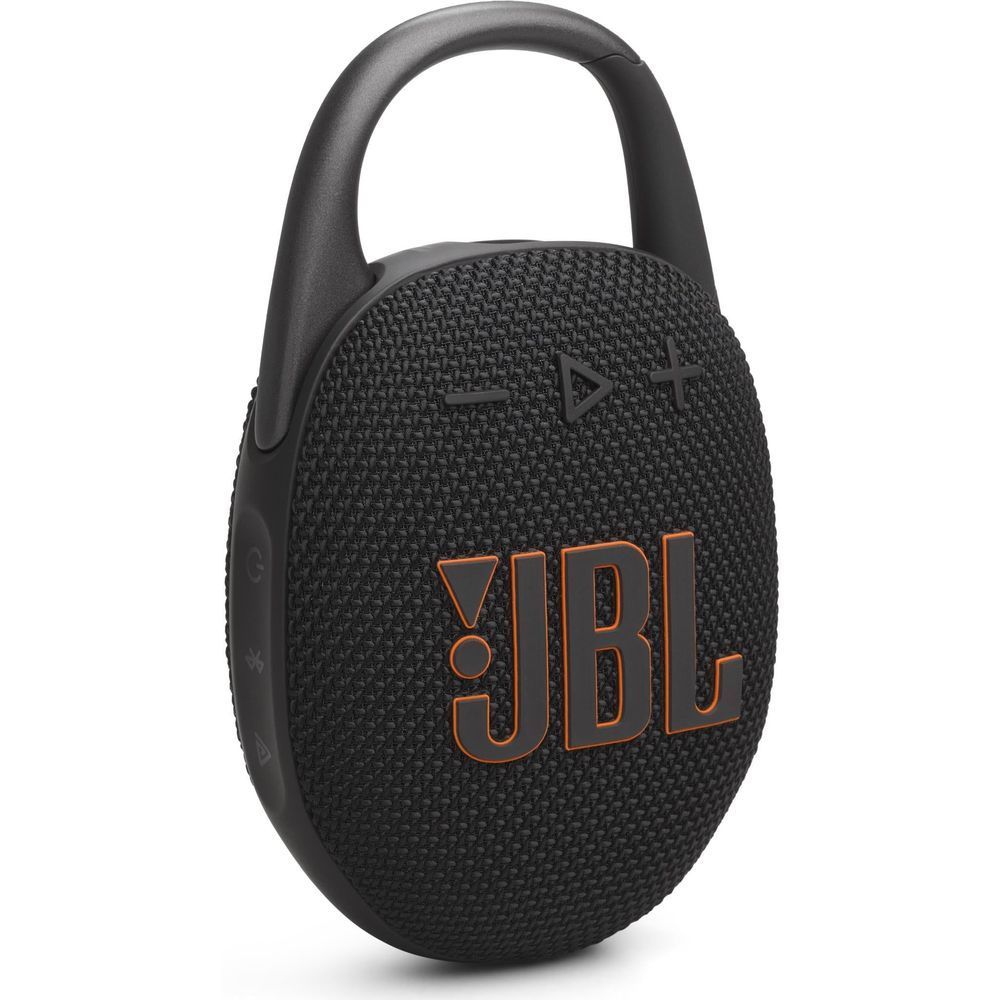
The JBL Clip 5 is small enough to pack neatly in a cabin bag and easy to take on walks once you arrive. JBL specifies a 5.32Wh battery. Put it inside your bag rather than clipped loosely to the outside, and protect the power controls.
JBL Flip 7: mid-sized portable option
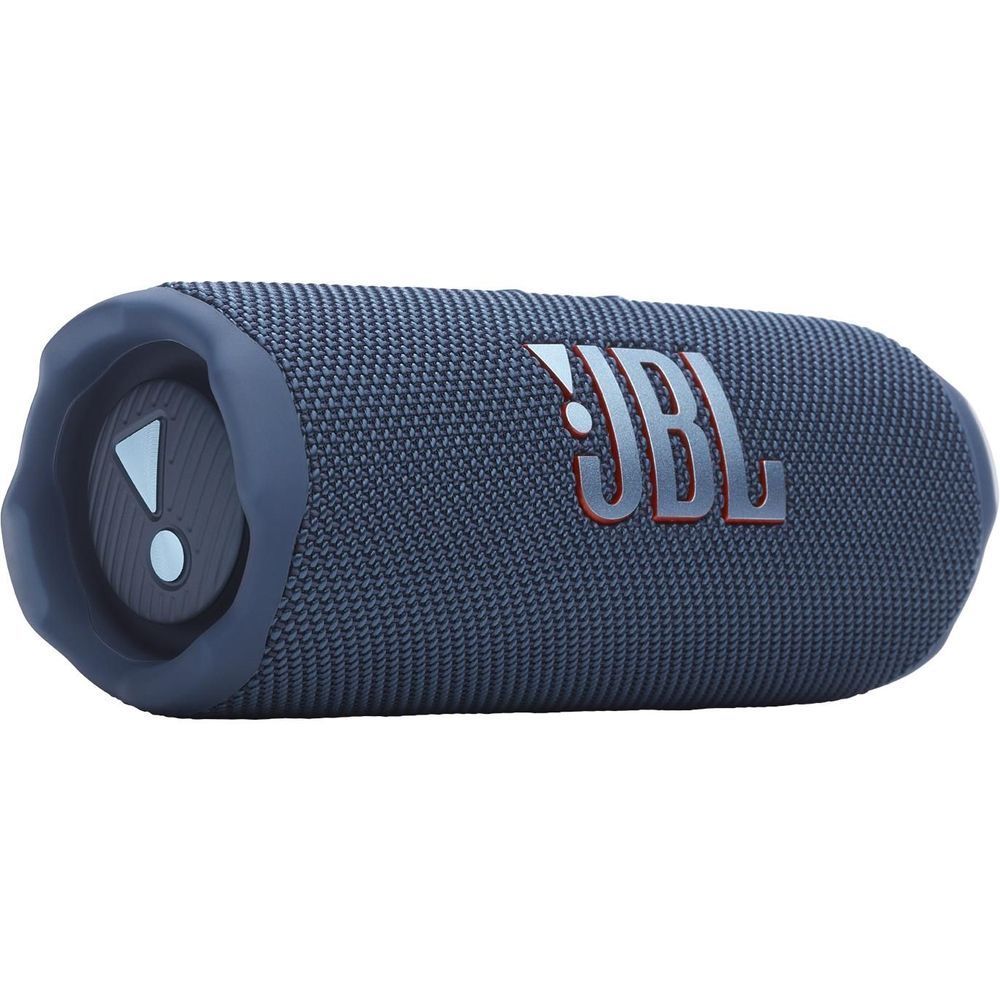
The JBL Flip 7 is designed for portable listening after your journey, for example at a picnic or holiday accommodation. JBL specifies a 17.28Wh battery; check the rating on your own unit before a domestic or international flight.
JBL Charge 6: check the phone-charging function
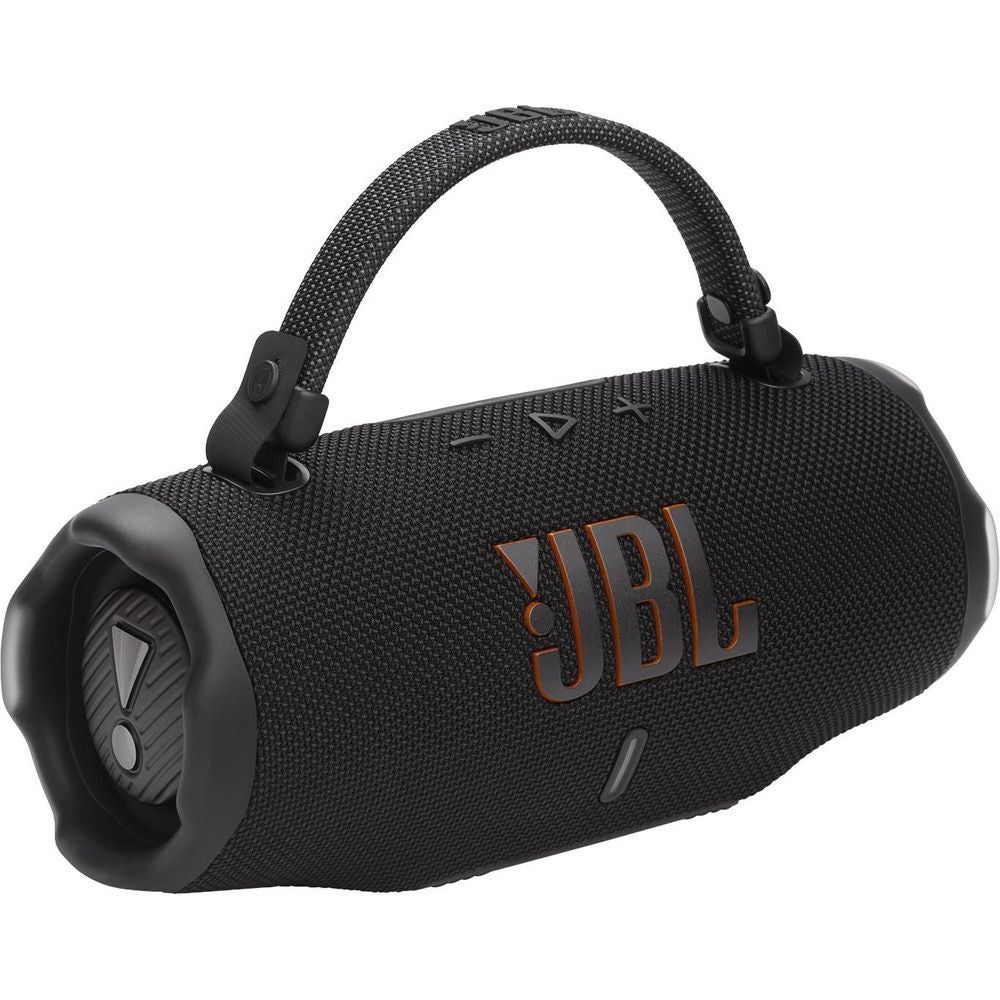
The JBL Charge 6 can also charge compatible devices and has a 34Wh battery according to JBL. Because of that feature, it is especially important to check the operating airline's classification and conditions before placing it in checked luggage.
For other models and sizes, explore portable Bluetooth speakers at Tech Supply Shed or read our NZ summer portable-speaker buying guide.
Can you actually play music through a speaker on a plane?
Being permitted to carry a speaker is not the same as being permitted to use it to play sound in the passenger cabin. Even when Bluetooth connections are allowed under flight-mode instructions, loudspeaker playback may disturb other travellers or contravene crew instructions. Bring headphones for the flight; save the Bluetooth speaker for your destination.
Seven-point packing checklist for NZ travellers
- Confirm the exact speaker model and installed lithium battery's Wh rating.
- Choose carry-on baggage whenever possible.
- Check the operating airline's rules for every domestic or international flight.
- Check power-bank rules if the speaker can charge a phone.
- Protect the speaker from impact and accidental activation.
- Keep loose spare lithium batteries and separate power banks out of checked luggage.
- Follow airport security and cabin crew instructions.
Frequently asked questions
Can I take a Bluetooth speaker in carry-on luggage on a domestic NZ flight?
Generally yes, when its installed battery meets the operating airline's requirements and the speaker fits within your cabin baggage allowance. Carry-on is the preferred place.
Can I take a portable speaker on an international flight from New Zealand?
Generally yes, subject to the battery, cabin baggage and dangerous-goods rules of every operating airline and any transit requirements.
Can I pack a JBL speaker in checked luggage?
Sometimes, if its installed battery qualifies and the airline permits it. Check the operating airline's conditions; Air New Zealand recommends checking lithium-battery devices only if carry-on is not possible.
Can I put a separate speaker battery or power bank in my suitcase?
No. Spare lithium batteries and power banks must be packed in carry-on baggage within applicable airline restrictions.
Can I play music through a Bluetooth speaker during the flight?
Do not assume so. Carrying a speaker is not permission to play audio aloud in the cabin; use headphones and follow crew instructions.
Final verdict: carry-on is the better choice
Whether you're travelling domestically within New Zealand or internationally, most qualifying portable Bluetooth speakers are easiest and safest to transport in carry-on baggage. A checked suitcase may be an option for certain speakers with installed batteries, but the conditions are more restrictive. Check your model and your operating airline rather than assuming every rechargeable speaker follows identical rules.
Shop Portable Bluetooth Speakers
Information sources: Civil Aviation Authority of New Zealand, Air New Zealand, and Jetstar. Airline policies can change. Last reviewed: 23 November 2026.
